News
Creating a Cohesive Look: Matching Cabinets and Countertops
When it comes to kitchen design, few decisions are as impactful as choosing the right combination of cabinets and countertops. These two elements form the foundation of your kitchen’s aesthetic, and getting the pairing right can mean the difference between a space that feels disjointed and one that flows beautifully. At Mette Cabinets & Countertops, we’ve helped countless homeowners navigate this important design choice, and today we’re sharing our insights to help you create a kitchen you’ll love for years to come.
Understanding the Relationship Between Cabinets and Countertops
Your cabinets and countertops don’t need to match perfectly, but they do need to work together harmoniously. The key is finding the right contrast, coordination, and visual flow that reflects your personal style.
The Classic Combinations That Always Work
Light Cabinets with Dark Countertops
This classic pairing creates beautiful contrast and visual interest. White, cream, or light gray cabinets paired with dark granite, black quartz, or deep soapstone countertops offer a sophisticated look that works in both traditional and contemporary kitchens. The light cabinets keep the space feeling open and bright, while the dark countertops ground the design and hide everyday wear beautifully.
Dark Cabinets with Light Countertops
If you’re drawn to the drama of navy, charcoal, or espresso cabinets, pairing them with light countertops prevents your kitchen from feeling too heavy or cave-like. White quartz, or pale granite provides the perfect balance, reflecting light and creating breathing room in the design. This combination works especially well in kitchens with plenty of natural light.
Wood Cabinets with Neutral Countertops
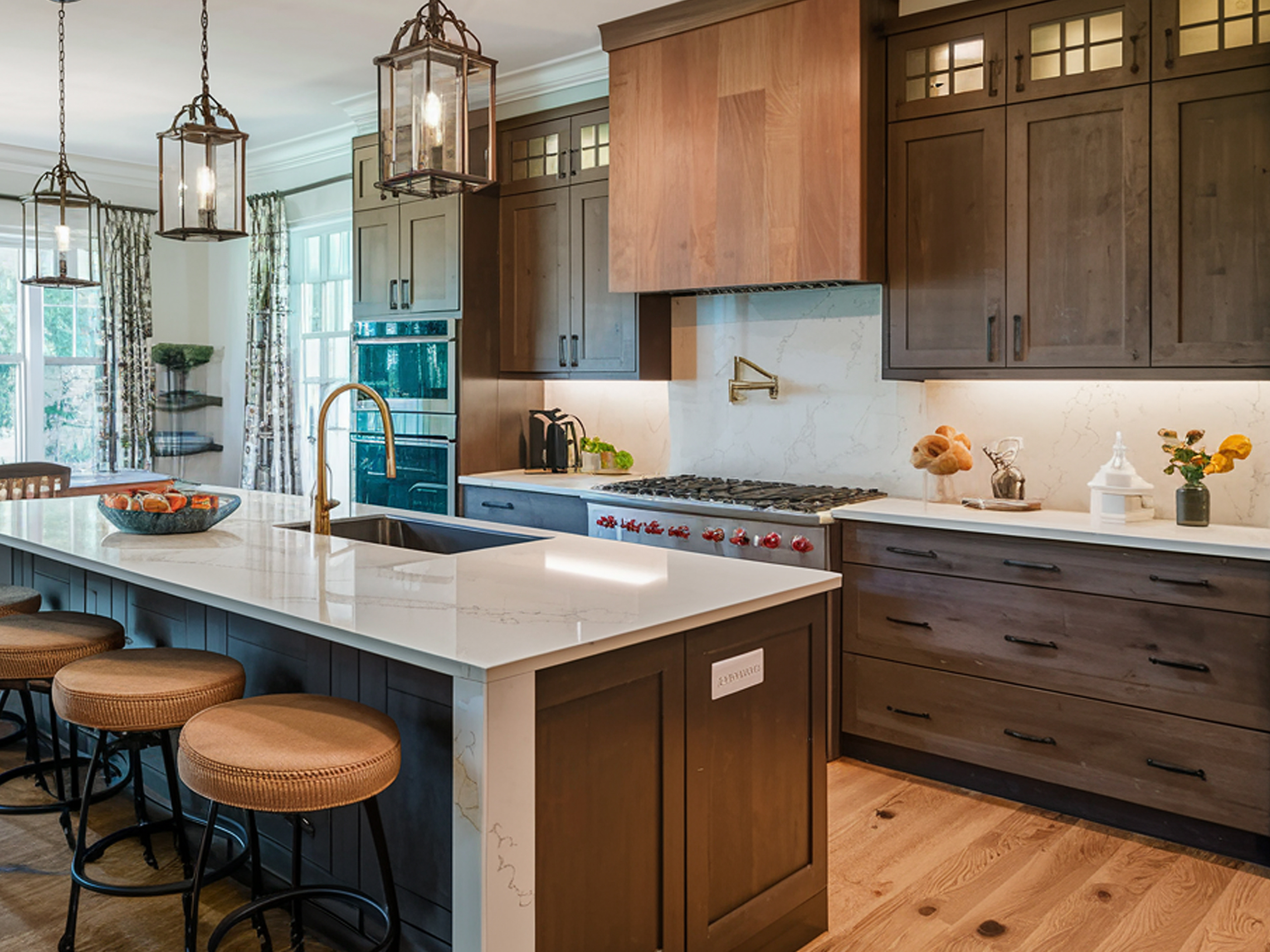
Natural wood cabinets bring warmth and organic beauty to a kitchen, and they pair wonderfully with neutral countertops in whites, creams, beiges, or soft grays. This combination creates a warm, inviting atmosphere that never goes out of style. The key is choosing a countertop that doesn’t compete with the wood grain but rather allows it to shine.
Consider Your Undertones
One of the biggest mistakes we see in kitchen design is ignoring undertones. Every color and material has an undertone, whether warm (yellow, red, orange) or cool (blue, green, gray). For a cohesive look, your cabinets and countertops should generally share the same temperature.
For example, if you’ve chosen cabinets with warm undertones like honey oak or cream, pair them with countertops that have warm beige, gold, or brown veining. Cool-toned gray cabinets look best with countertops featuring gray, white, or blue-gray patterns. When undertones clash, the entire space can feel off, even if you can’t immediately pinpoint why.
The Power of Veining and Pattern
The pattern in your countertops matters just as much as the color. Busy, heavily veined countertops pair best with simple, solid-color cabinets that won’t compete for attention. Conversely, if you’re choosing painted cabinets in a bold color or two-tone design, consider a more subtle countertop with minimal veining.
Granite and quartz with dramatic veining make stunning statement pieces but need the support of understated cabinetry. On the other hand, solid quartz or subtle granite patterns allow you more freedom to experiment with cabinet colors and styles.
Don’t Forget About Your Third Element
While cabinets and countertops are the stars of the show, your backsplash is the supporting actor that ties everything together. When selecting your cabinet and countertop combination, always consider how your backsplash will bridge the two. A well-chosen backsplash can pull colors from both elements and create seamless visual flow throughout the space.
Testing Before Committing
Here’s a pro tip from our design team: never make final decisions based on small samples alone. Bring your cabinet door sample and countertop swatch into your actual kitchen space. View them together in both natural daylight and evening artificial light. Colors and finishes can look dramatically different depending on lighting conditions, and what looks perfect in the showroom might not work in your home.
We also recommend looking at the samples from different angles and distances. Step back and view them as you would when standing at your sink or cooking at the stove. This gives you a more realistic sense of how the combination will look in everyday life.
Working with What You Have
If you’re only replacing one element, you’ll need to work with what’s staying. Replacing cabinets but keeping countertops? Choose cabinet colors that complement your existing stone. Updating countertops only? Select a material and pattern that harmonizes with your current cabinetry. This is where working with experienced designers can save you from costly mistakes.
The Bottom Line
Creating a cohesive look between your cabinets and countertops isn’t about following rigid rules. It’s about understanding the principles of color, pattern, and balance, then applying them in a way that reflects your personal style and the way you live. Whether you prefer neutrals or bold statement colors, the right combination will make your kitchen feel intentional, harmonious, and uniquely yours.
At Mette Cabinets & Countertops, we’re here to guide you through every step of the selection process. Our experienced team can help you visualize different combinations, understand how materials will perform in your specific space, and ultimately create a kitchen that’s as beautiful as it is functional.
Ready to start planning your dream kitchen? Contact us today to schedule a design consultation. We’ll help you find the perfect cabinet and countertop combination that brings your vision to life.